Opinion: 290 U.S. 371 (1933)
HOLDING: The defendant’s conviction for violating Prohibition laws was vacated because the district court improperly excluded testimony by the defendant’s wife in his favor; overruling prior cases following common law rule prohibiting spousal testimony in federal criminal trials.
The defendant was a federal prohibition agent charged with and convicted of conspiracy to violate the National Prohibition Act, also called the Volstead Act. His initial conviction was vacated by the Fourth Circuit because of an evidentiary error related to testimony by an accomplice. He was convicted again after a retrial and the Fourth Circuit affirmed. At both trials, the District Court excluded his wife’s testimony based on a common law rule of evidence that a wife is incompetent to testify in favor of her husband.
The Supreme Court reversed the conviction, holding that a wife of a defendant in a criminal trial in federal court is a competent witness in his behalf. The Court overruled prior cases following a contrary common law rule, relying on the Court’s power, in the absence of congressional legislation, to declare the present common law rule in light of changes in “conditions,” “public policy,” and reasons on which it was based. The Court cited a trend in the context of other witnesses to expand “the domain of competency” and the province of the jury to determine credibility.
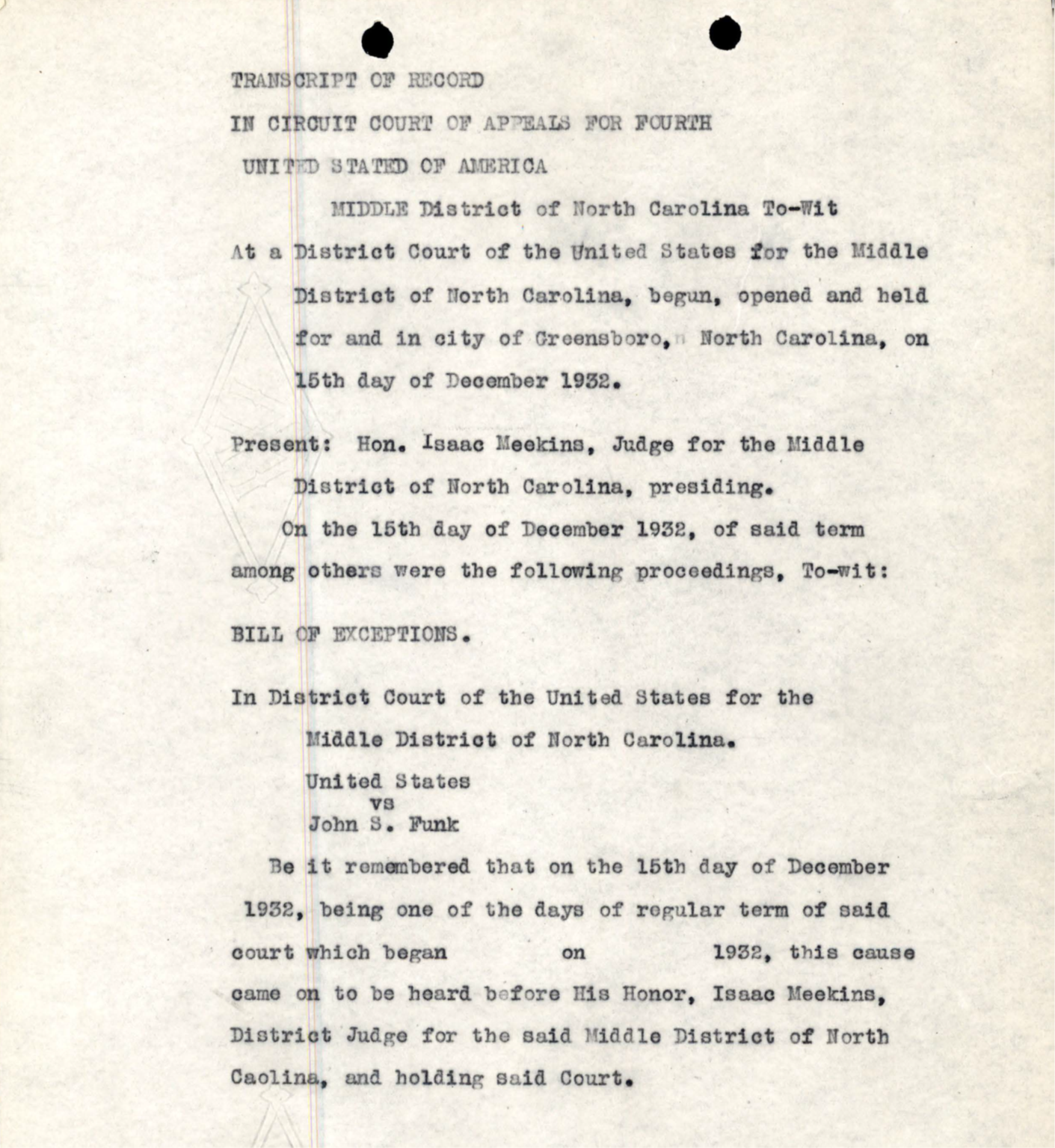
Read the trial transcript of the case.